Updated 2026 · 9 min · by NebulaTrip local experts
Book Mogao before building the rest of Dunhuang. The 2026 official system separates a normal visit—digital films plus eight physical caves—from an emergency high-season visit covering four caves; special caves use another limited process. Those products are not interchangeable, and no ticket guarantees a favourite cave. Mingsha Mountain and Crescent Lake fit another half day. Yulin Caves or the western Yumen/Yadan route needs a separate decision. Two days gives the core; three prevents the desert from becoming a series of timed transfers.
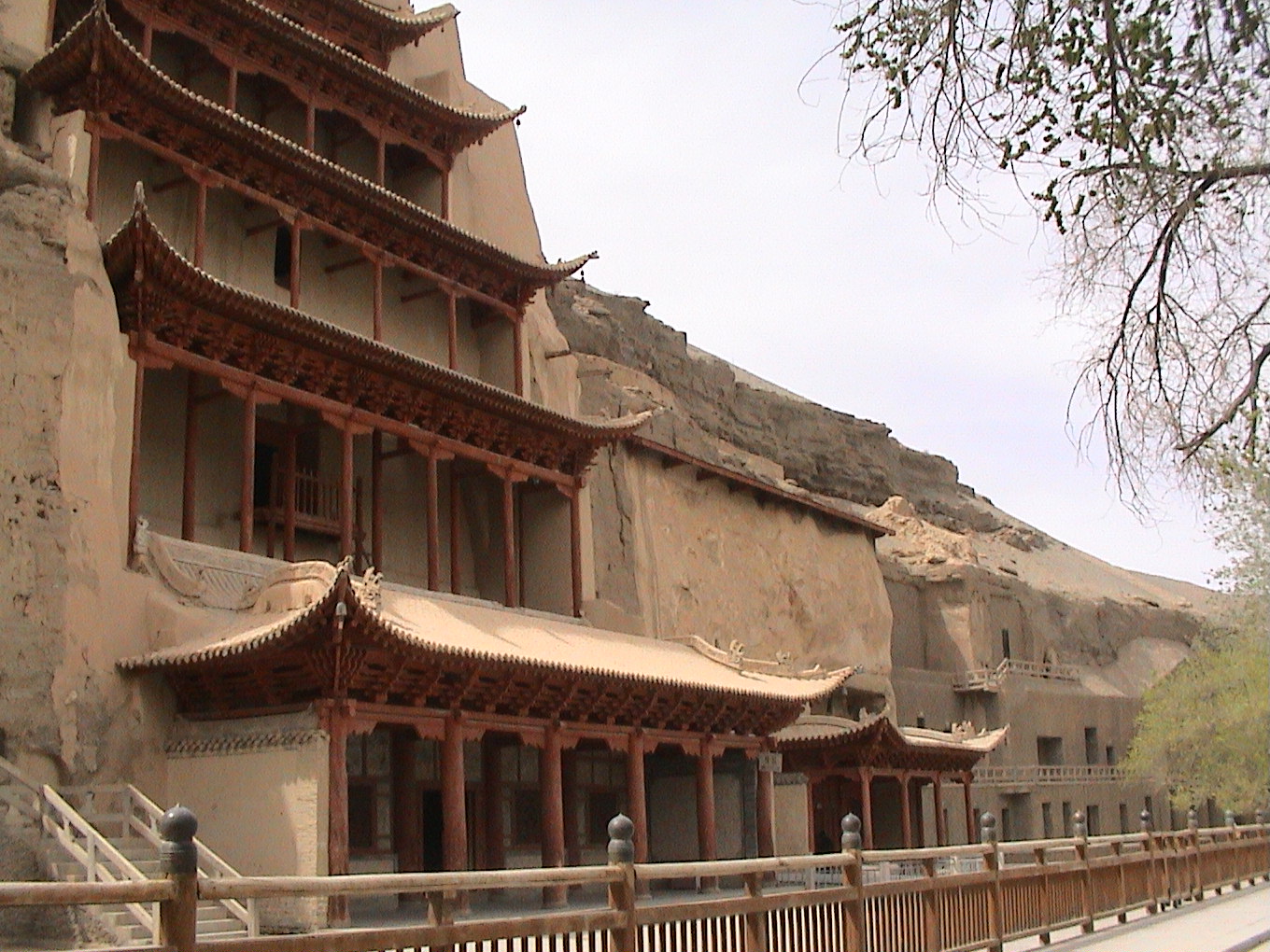
The Dunhuang Academy's 2026 notice sets real-name, timed admission with daily capacity management. The normal mode includes a digital-centre programme and eight physical caves; an emergency mode may be activated in the busy season with four physical caves, while special caves depend on conservation and capacity. Compare the exact product, not just the word “Mogao.”
Foreign-passport visitors can use the official English booking route in the Mogao reservation WeChat service. Enter names and document data exactly, bring the same original passport and follow the current instruction for exchanging the booking information slip. The Academy says it has not authorised third parties to act as ticket agents. A reseller promising sold-out normal tickets or a named cave is a warning sign.
The Digital Exhibition Centre is the first stop; the cave area does not operate as a drive-up ticket office or public car park. The 2026 notice asks visitors to reach the centre before their slot. Save enough time for document handling and the shuttle rather than treating the printed admission time as a town-hotel departure time.
Caves open in rotation according to protection and visitor management. A guide or group cannot demand a specific grotto because it appears in a book. The useful preparation is to learn the broad chronology and a few themes, then listen for what the day's selection actually shows. Cave 17, the Library Cave, has a major historical role, but its fame does not mean every ticket enters it.
Follow the current no-photography, lighting, touching and recording instructions. Do not bring a private torch into a cave unless staff explicitly permit it; the old advice to illuminate pigments for yourself conflicts with controlled conservation. Interior images online may be official documentation, historical records or replicas. Never caption one as an original mural without a precise cave, object and source.
Use the museum and digital material to revisit details that cannot be studied during the controlled cave stop. A knowledgeable interpreter should distinguish original fabric, conservation work, reproduction and digital reconstruction. They add context; they cannot alter the protected route or make a crowded timed visit private.
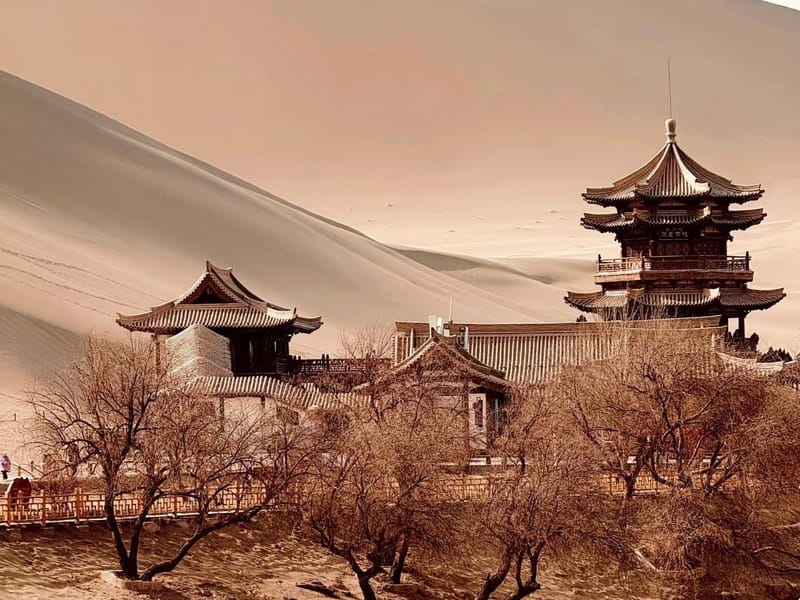
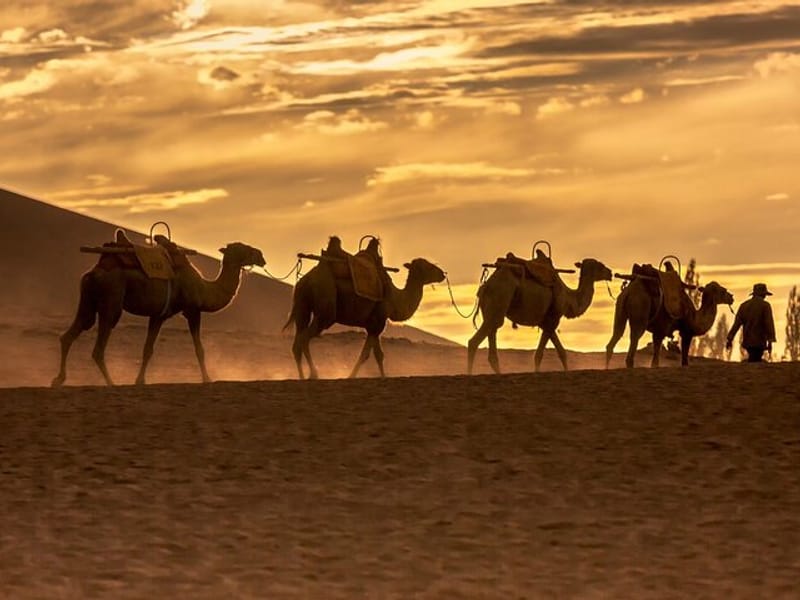
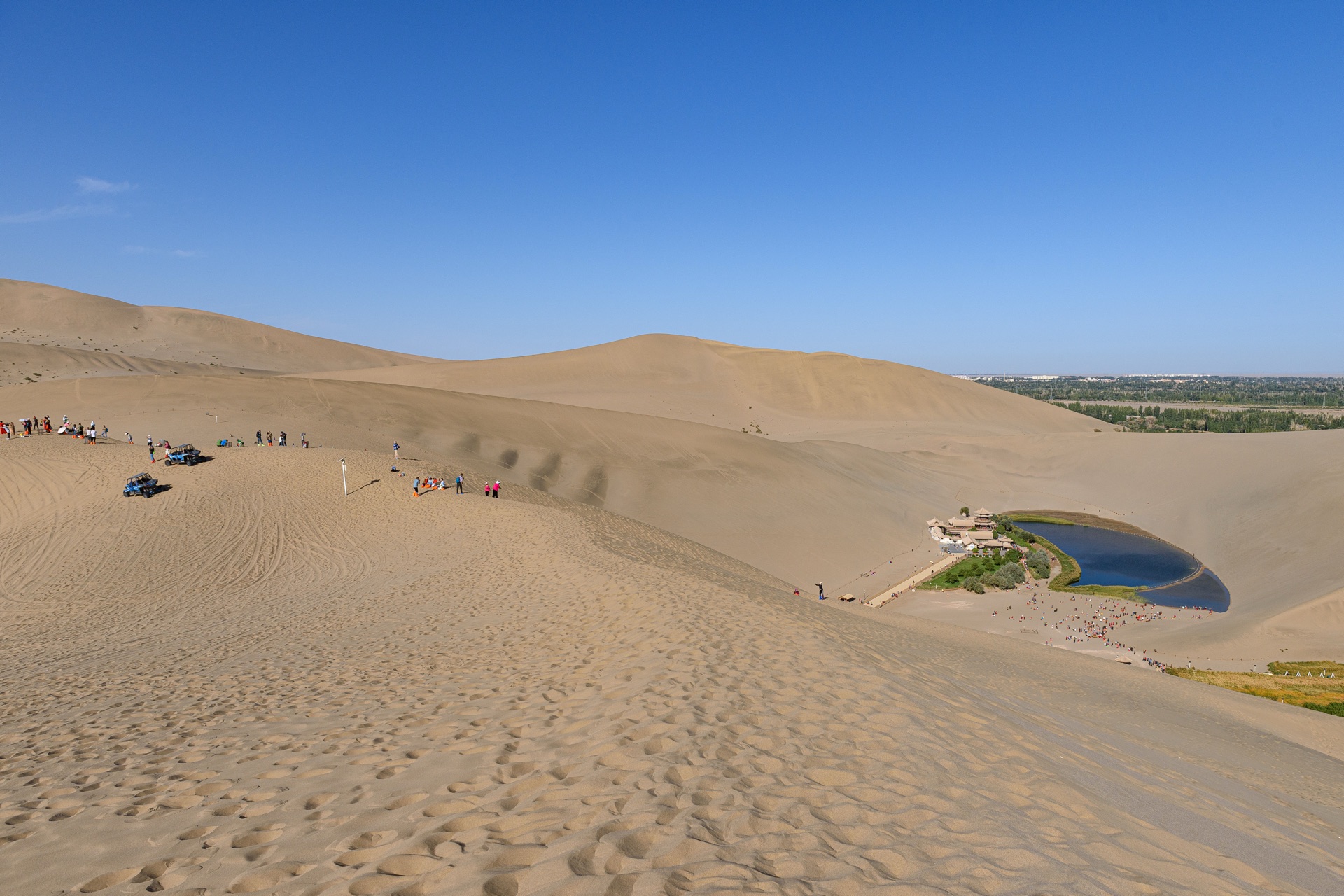
Mingsha Mountain and Crescent Lake form one managed scenic area close to the city, but an entrance image does not prove the current opening, camel route or night programme. Choose early morning for cooler sand or late afternoon for changing light, then verify the day's last entry and transport. Sunset, a singing sound from the dunes and an unobstructed lake view are possible, not included products.
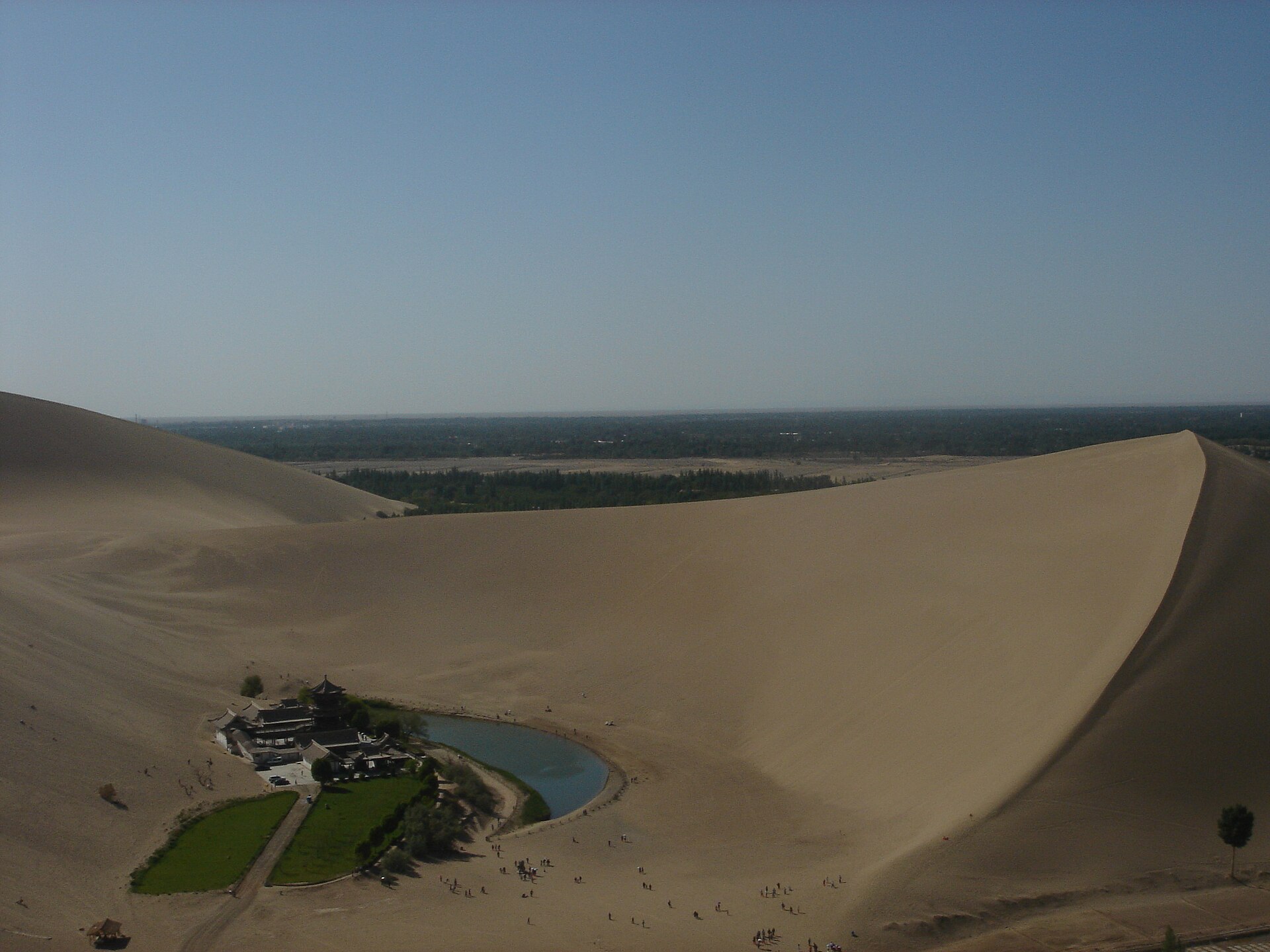
Sand walking is tiring and summer heat can be severe. Carry water, sun protection, eye protection and a layer for wind or evening cooling. Use marked access and avoid climbing a closed slope. Camel rides, sand vehicles, shoe covers and other add-ons have their own current terms; inspect the operator and decline what does not fit.
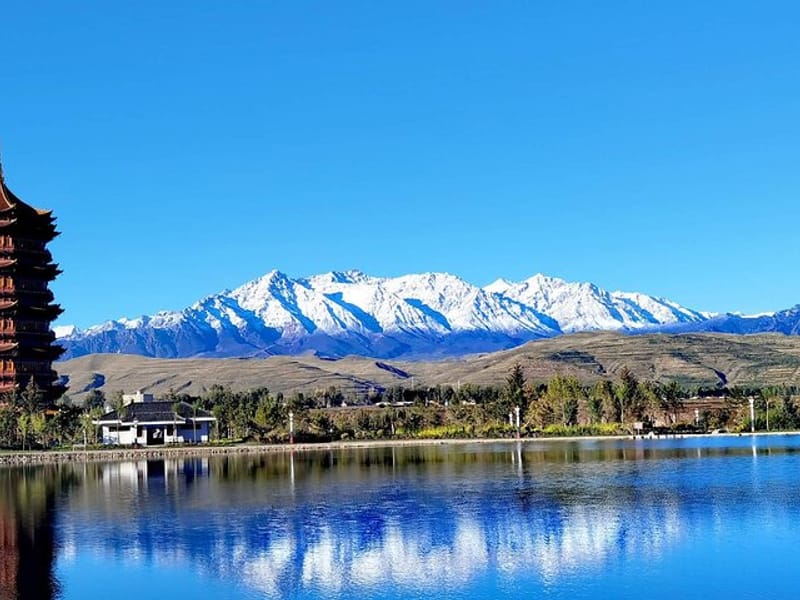
The lake is not proof that a desert spring has remained unchanged for a fixed number of years. Describe the visible water and managed landscape without inventing hydrology. Drone, tripod, commercial-shooting and event rules must be checked rather than assumed from an open dune.
Yulin Caves in Guazhou County is a separate Dunhuang Academy grotto site, not another entrance to Mogao. It suits travellers who want another controlled cave visit and can accept extra road time. Confirm its own ticket, opening, transport and available caves. A Yulin exterior photograph must not be captioned as Mogao, and an interior object still requires exact cave and reproduction status.
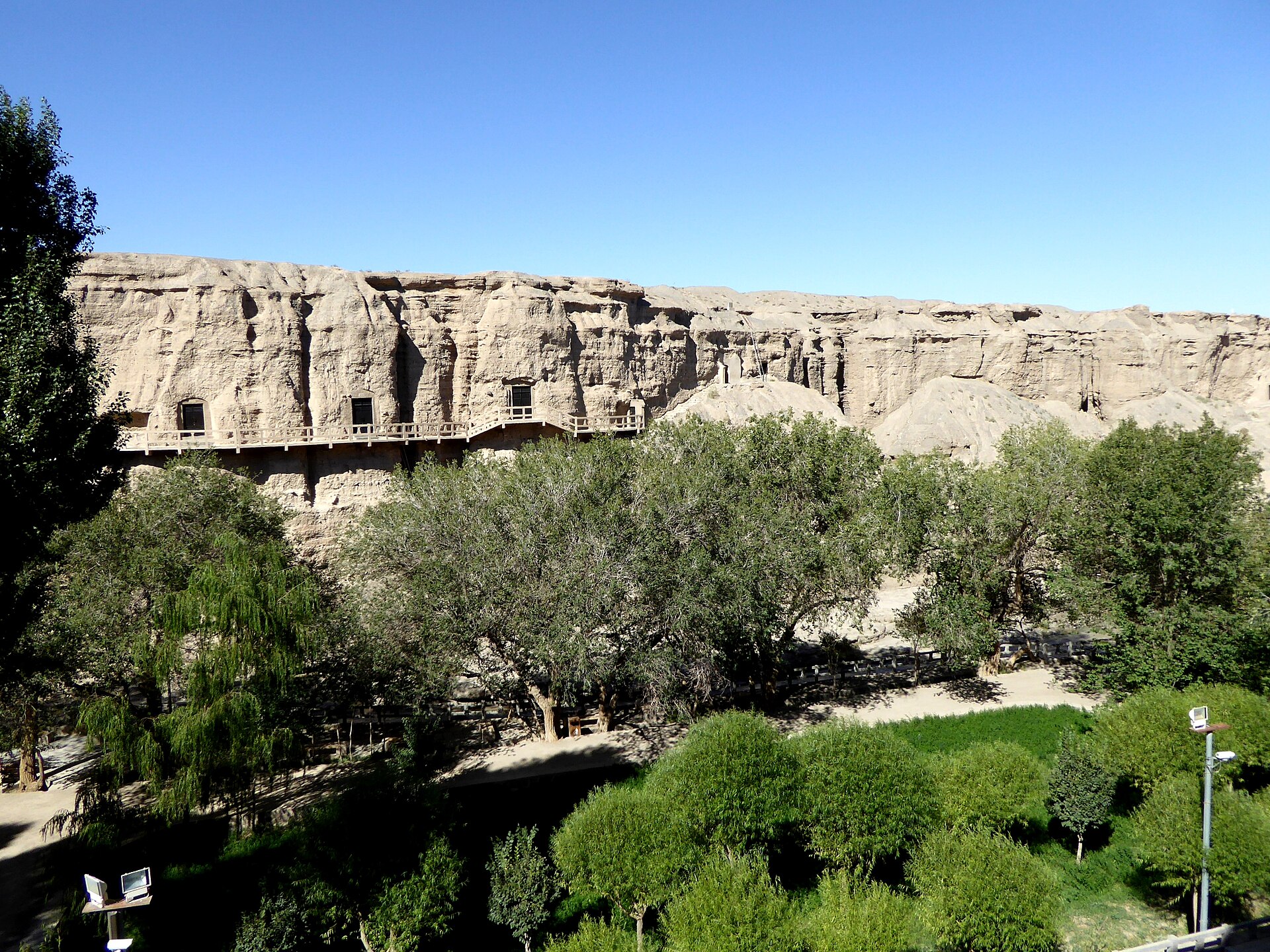
The alternative is the long western route toward Yumen Pass and Yadan landforms. These are dispersed outdoor sites requiring a current vehicle plan, admission checks, water and weather margin. A poetic “Silk Road sunset” is not a route: name every included stop, return time and whether the driver waits. Do not combine Yulin, Yumen, Yadan and Mingsha in one compressed day.
Choose by interest. Yulin adds art and conservation context; the western loop adds frontier archaeology and landform scale. Either can be lost to weather or access changes, so protect the prebooked Mogao anchor and keep the optional day refundable where possible.
A practical two-day route places Mogao in its booked slot and Mingsha in the other half day, leaving town, museum or rest time around them. A third day holds Yulin or the western loop. Match the railway terminal or airport to the actual timetable; Liuyuan South, Dunhuang station and Dunhuang airport require different transfers, and a station name alone does not prove a two-hour connection.
Weather can close even a desert cave site. In June 2026 Mogao suspended and then resumed after rain; in July the Academy again warned that prolonged rain might force a closure and promised official notice and refund handling. Check the Academy channel immediately before departure and never pressure a driver to bypass a closure.
Carry the registered passport, offline order, hat, sunglasses, high-SPF sun protection, water, warm and wind layers and payment backup. A guide is valuable for art interpretation or a dispersed road day, but the official booking and cave rules still control. The successful visit is the protected visit you actually booked, not a checklist of famous cave numbers.
Private & flexible · English-speaking guide · real-time online booking.
Tell our local experts what you'd like to see and we'll design a private, tailor-made itinerary with English-speaking guides — free plan & quote, no obligation.