Updated 2026 · 10 min · by NebulaTrip local experts
Treat the Terracotta Warriors as an archaeological museum complex, not one hall of statues. The essential visit is the three pits; the wider ticket also connects to the Qin mausoleum area at Lishan Garden, where the original bronze chariots are displayed. Decide before leaving Xi'an whether you want only the pits or the fuller site, because transport, interpretation and walking time expand quickly.
Discard directions built around the old Tourist 5/306 bus. The museum's current official route from Xi'an Railway Station is metro Line 4 to Wulukou, Line 1 to Fangzhicheng, Line 9 to Huaqingchi, then Lintong Tourist 613 or bus 602 to the museum area. From Xi'an North, the route starts on Line 2 before joining Line 1 and Line 9. Check the last transfer and current stop name on the day you travel.
A direct scenic shuttle, taxi, ride-hailing car or hired driver reduces transfers, but confirm the licensed pickup point and whether the quoted fare includes waiting and return. Ignore drivers who insist an unrelated shop, replica site or “free explanation center” is a required entrance.
Leave enough margin for security and the walk from the transport stop. If you plan to continue to Lishan Garden, do not book a return car for the time you expect to finish Pit 1. The museum comprises both the Terracotta Warriors museum area and the mausoleum archaeological park; they are not one compact hall. Starting earlier creates flexibility, not a guarantee of empty galleries.
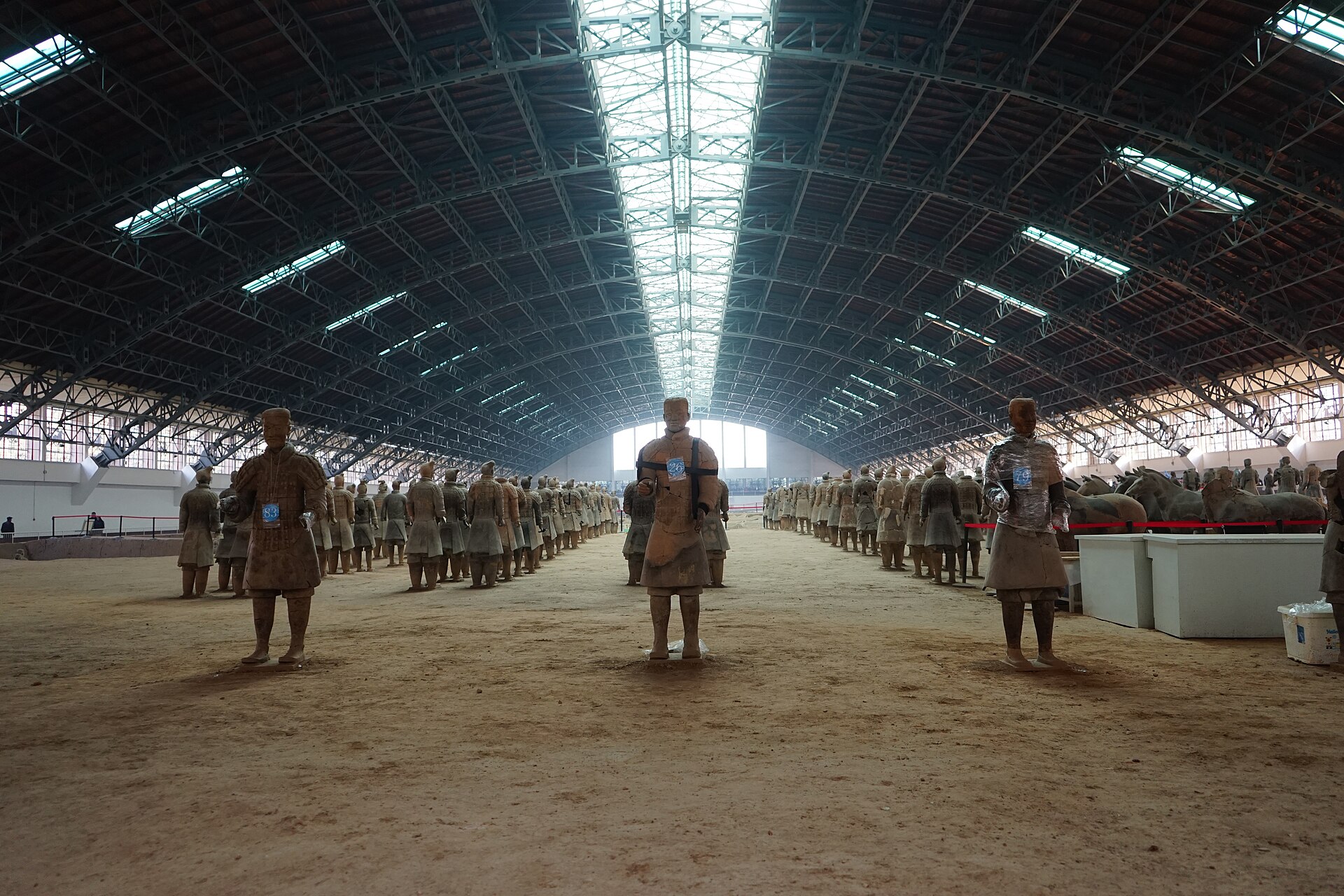
Pit 1 gives the clearest sense of scale: ranks of reconstructed terracotta figures stand inside a vast protective hall, while other areas show excavation and conservation rather than a completely unearthed army. It deserves time at both the broad overview and the repair end of the hall.
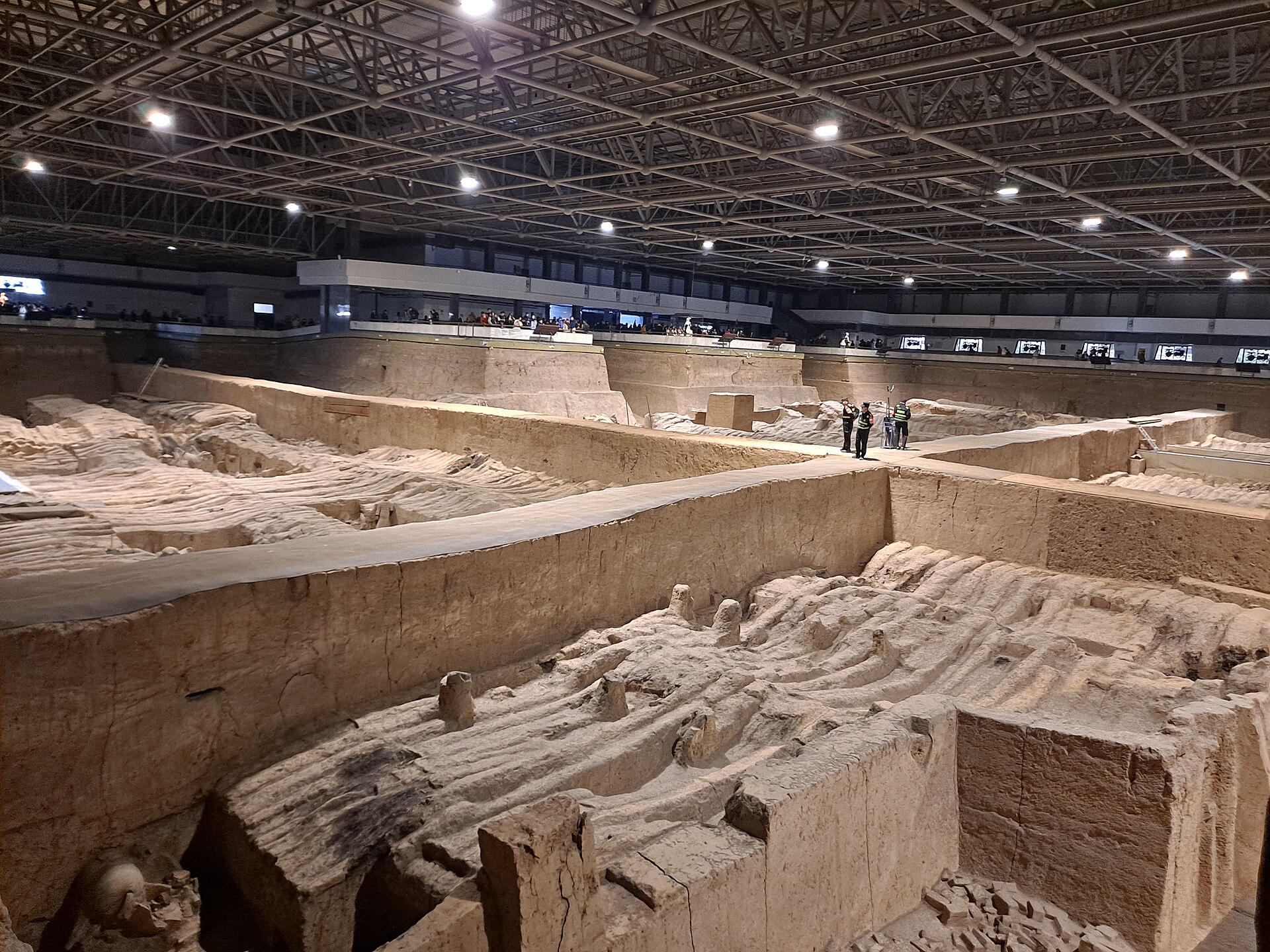
Pit 2 is less visually immediate but more useful for comparing formations and types of military unit. Much remains in archaeological context. A 2026 display-upgrade project means current sightlines and visitor circulation may differ from old photographs, so follow the open route rather than hunting for one famous figure.
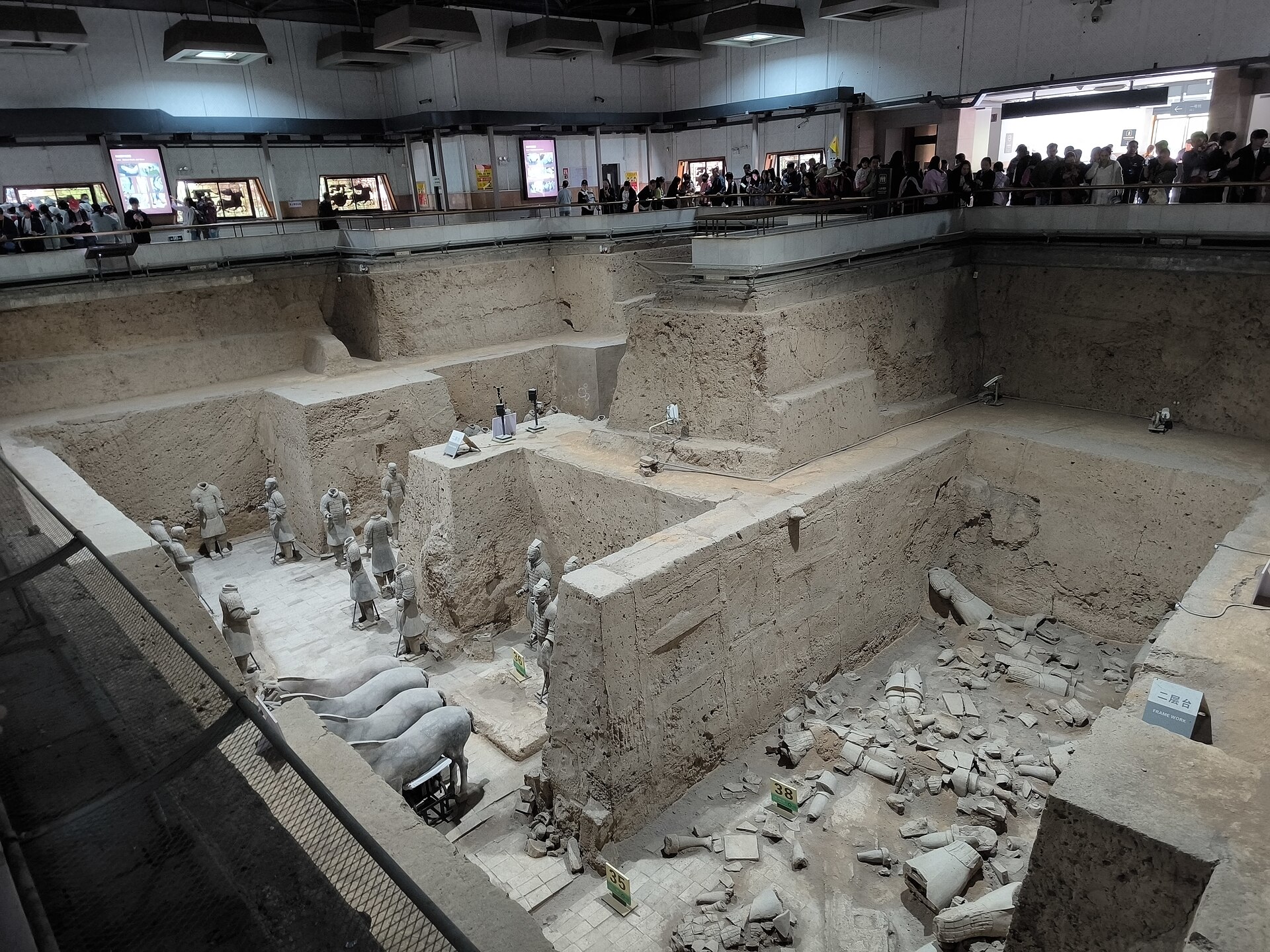
Pit 3 is much smaller and is commonly interpreted as a command area. Keep “commonly interpreted” in the explanation; the layout supports a scholarly reading, not an eyewitness account of how the chamber functioned.
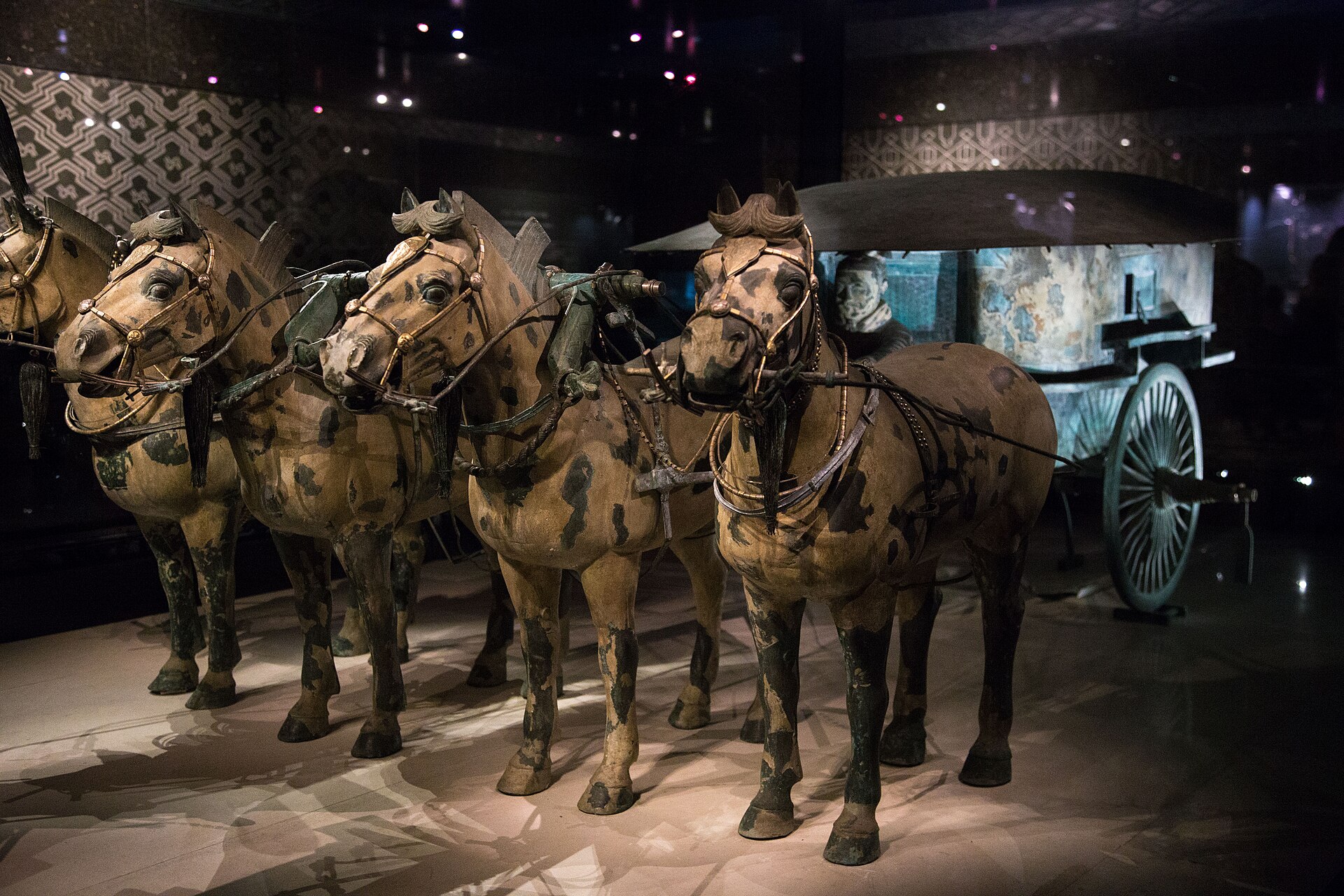
There is no universally superior sequence. Pits 3 → 2 → 1 creates a large final reveal; Pit 1 first protects the priority if time or energy is limited. The Qin bronze chariot museum is at Lishan Garden, not an incidental case between the pits. The two original chariots have been displayed together there since April 2024. A 2015 photograph of chariot No. 2 shows one original vehicle only and does not document today's gallery layout.
Interpretation is worth paying for if it distinguishes evidence from a good story. Ask how archaeologists read armour, hairstyles, formation and tool marks; why surviving pigment is fragile; which figures have been reassembled; and what remains unexcavated. Those questions make the pits different from one another.
Choose among a licensed on-site guide, an official audio option or a pre-booked private guide. Language ability and historical discipline matter more than how dramatic the delivery sounds. A useful guide points out uncertainty and labels reconstructions, replicas and original material. Be cautious with absolute claims that every face depicts a named individual, that one pit has a single proven function, or that a sensational object is “secret.”
If visiting independently, read the official museum overview before arrival and slow down at the excavation edges. Use the first pit to learn the vocabulary, then compare the others. Do not measure value by a fixed visit length: a focused two-pit visit can be better than following a speaker through every hall without understanding. For families, agree on a few questions to answer instead of expecting children to absorb a full dynasty lecture while standing in a crowd.
The museum uses real-name advance booking for all visitors, including foreign passport holders, through its official website and WeChat channel. Use the exact passport details and carry that original passport. The official guide page publishes a normal maximum daily capacity of 65,000, but holiday operations can extend hours or change ticket volume; capacity is not a forecast of comfort.
Normal seasonal entry begins at 8:30, with the last-entry time later from March through November than in winter. Check the live ticket page rather than copying hours or prices into an inflexible transport booking. National holidays can sell out, and arriving without a reservation is a poor gamble.
Inside, expect long standing periods, hard floors, security checks and bottlenecks at the most recognizable views. Wear comfortable shoes and carry weather protection for the outdoor movement between buildings. Follow current photography signs; museum restrictions, conservation work and temporary routes outrank a generic guide. Budget several hours for the pits and additional time for Lishan Garden. If you have only a short window, protect Pit 1 and one interpretive stop rather than rushing every labelled room.
If you want the complete museum story, use remaining time for Lishan Garden before adding a separate attraction. The mausoleum mound and surrounding archaeological landscape explain why the warriors exist, while the bronze chariot museum adds original metalwork at a different scale. Confirm the current internal transfer and entry arrangements when you arrive; do not assume a historical map shows today's stop order.
Huaqing Palace is the logical external add-on because it lies on the Lintong route, but it changes the day from one deep museum visit to a broader eastern excursion. Add it for Tang history and the palace landscape, not merely because a driver says it is “on the way.” A hurried visit to both can reduce the archaeological site to Pit 1 and a gift shop.
Xi'an City Wall, the Muslim Quarter area and Giant Wild Goose Pagoda belong to separate city time. Do not append them to a long Lintong day unless the evening plan is genuinely light. The strongest one-day choice is usually one of two shapes: pits plus Lishan Garden with careful interpretation, or the core pits plus Huaqing Palace. More stops produce a longer list, not necessarily a better understanding.
Private & flexible · English-speaking guide · real-time online booking.


Tell our local experts what you'd like to see and we'll design a private, tailor-made itinerary with English-speaking guides — free plan & quote, no obligation.