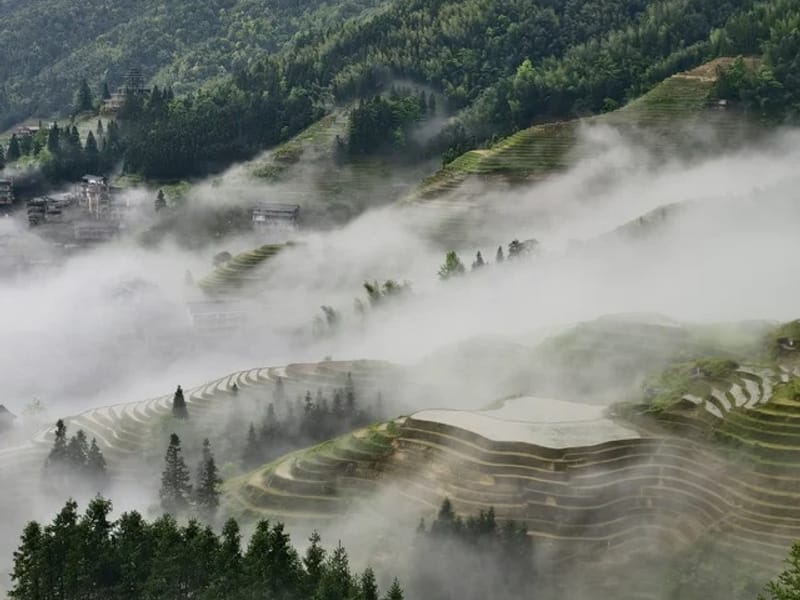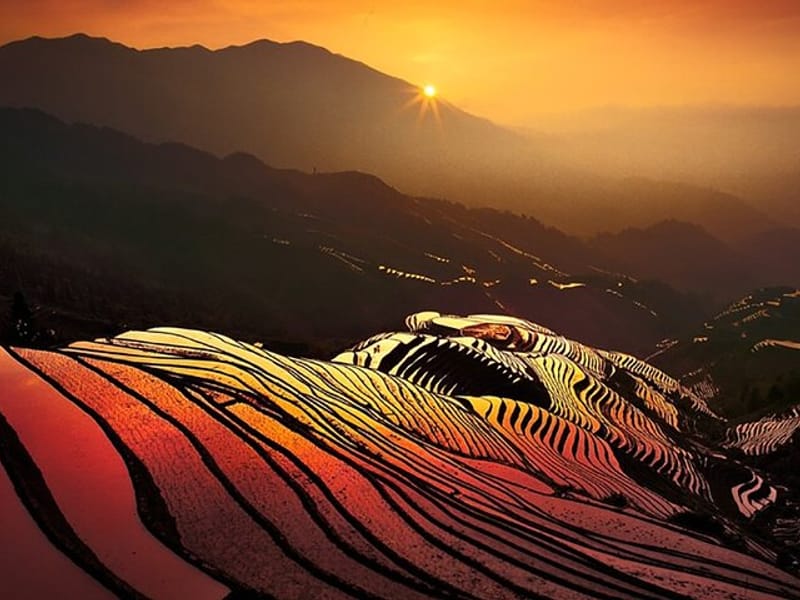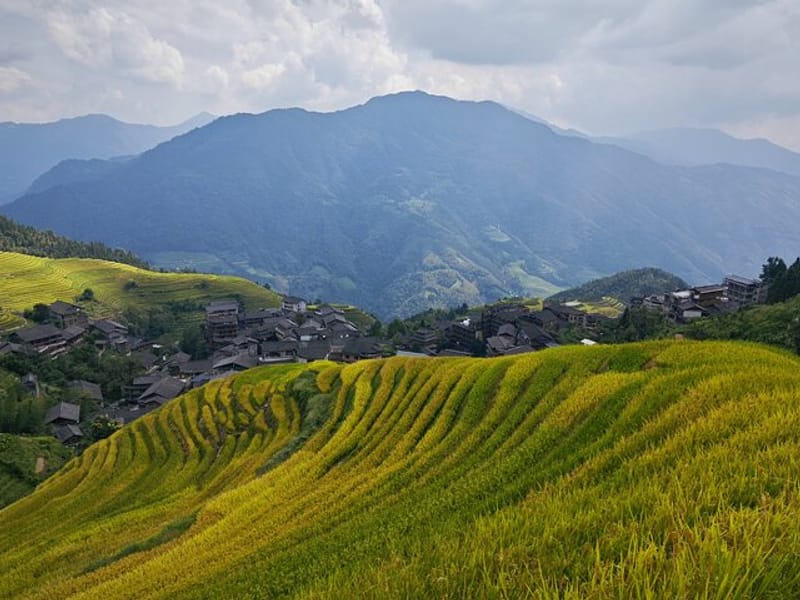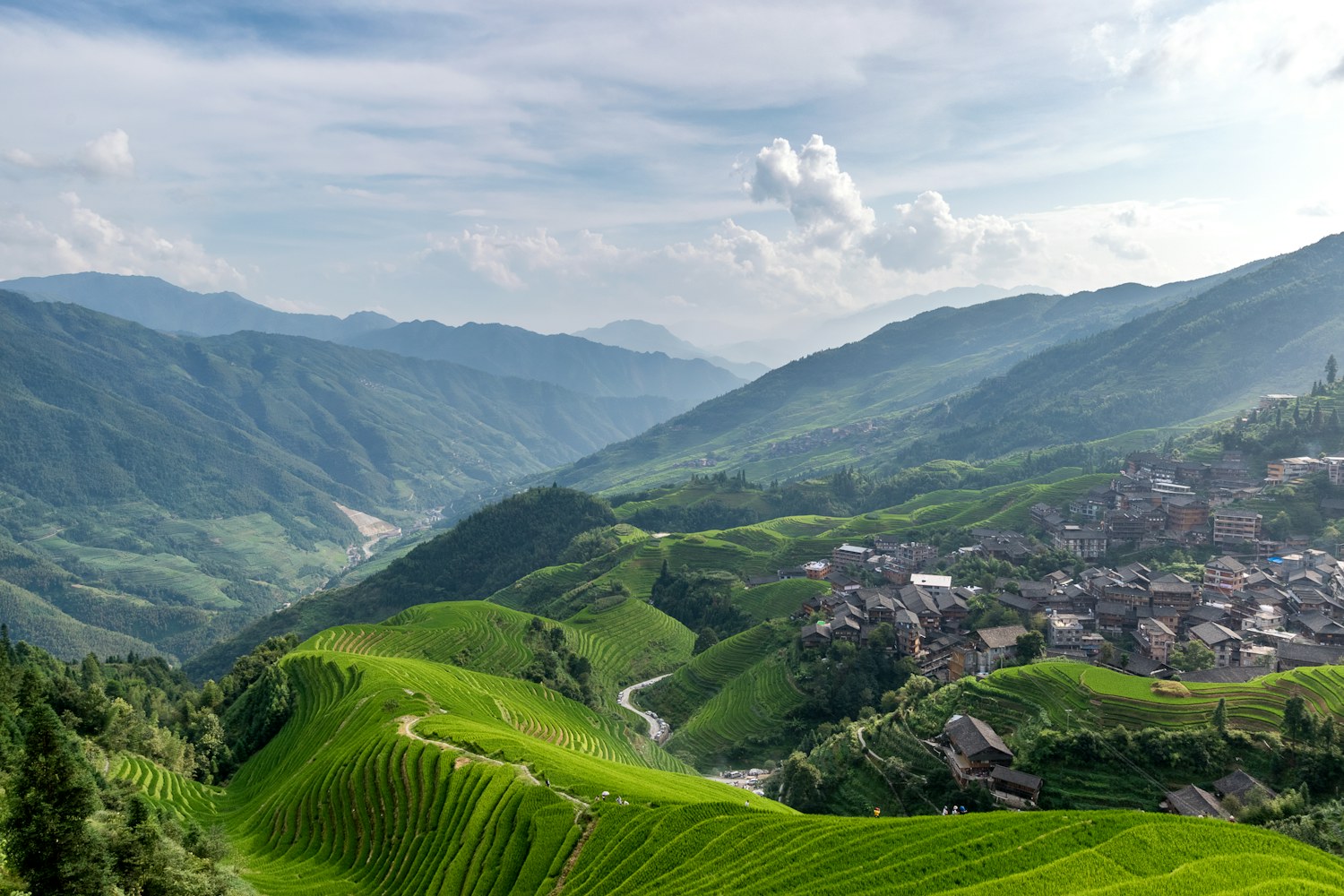
The Longji Rice Terraces climb the mountains of Longsheng in layered curves above Zhuang and Yao villages. The view changes dramatically through the year—from water-filled spring fields and green summer slopes to golden harvest terraces and quiet winter patterns. Choosing the right village and allowing enough walking time matters more than chasing one famous viewpoint.
Longji Rice Terraces quick facts
| Location | Longsheng County, north of Guilin |
|---|---|
| Time needed | A full day; overnight recommended for hiking or sunrise |
| Main areas | Ping’an and Dazhai/Jinkeng |
| Best for | Landscape, village culture, hiking and photography |
| Terrain | Many stone steps and steep village paths |
Ping’an or Dazhai?
Ping’an is compact, established and convenient for a first day trip, with classic viewpoints reached on foot from the village. Dazhai and the Jinkeng terraces cover a broader area and offer more extensive hiking, with transport assistance to higher viewpoints when operating. The best choice depends on time, fitness and whether you will stay overnight.
How the terraces change by season
Late spring often brings reflective water-filled fields, summer is intensely green, and harvest time produces golden bands when timing aligns. Winter is quieter and graphically beautiful but can be cold. Agricultural schedules vary each year, so no date guarantees a specific color or water level.
Day trip or overnight
A day trip provides one or two main viewpoints and village time. Staying overnight allows softer evening light, sunrise, longer ridge walks and a calmer experience after tour groups depart. Luggage can be awkward on steep lanes, so pack lightly or confirm porter and hotel access in advance.
Walking and accessibility
Even short routes involve repeated stone steps. Wear shoes with grip, carry rain protection and allow extra time in heat or wet weather. Travelers with mobility concerns should choose the area and accommodation carefully and confirm how close vehicles or cable transport can reach.
Village etiquette and food
Longji is a lived cultural landscape, not only a viewpoint. Respect homes, fields and working paths; ask before photographing residents closely. Local meals commonly feature rice, bamboo-cooked dishes and regional ingredients. A local guide can explain agricultural patterns and village traditions that are easy to miss on a fast photo stop.
Frequently asked questions
- When are the Longji terraces green or golden?
- Seasonal appearance depends on planting and harvest schedules that vary each year. Check recent local conditions close to your trip.
- Can I visit Longji as a day trip from Guilin?
- Yes, but travel takes a significant part of the day. Start early and focus on one terrace area.
- Is Longji suitable for older travelers?
- It can be, with careful route selection, but many paths have steep steps. Confirm vehicle, cable and hotel access before booking.