Updated 2026 · 10 min · by NebulaTrip local experts
The best trek in China in 2026 is not the most dramatic route on an old list. It is the one that is open for the exact date, authorised for the planned activity, and matched to the walker's altitude experience. That changes the ranking. Shangri-La's February 2026 notice explicitly lists the Tiger Leaping Gorge High Trail, Middle and Lower Gorge among undeveloped or unopened protected areas where unauthorised hiking is prohibited. A guide or guesthouse booking does not cancel that notice.
For a low-altitude first mountain walk, choose Huangshan's managed stair and cableway system. For a supported three- or four-day journey, consider Yubeng only after checking its official entrances and current routes. Mount Siguniang offers a useful ladder from scenic valley to registered outdoor activity, while Yading is best treated as a high-altitude scenic hike with a lower-route fallback—not an informal backcountry kora. This guide ranks decisions, not scenery, and makes the routes that should be left out just as clear as the ones worth planning.
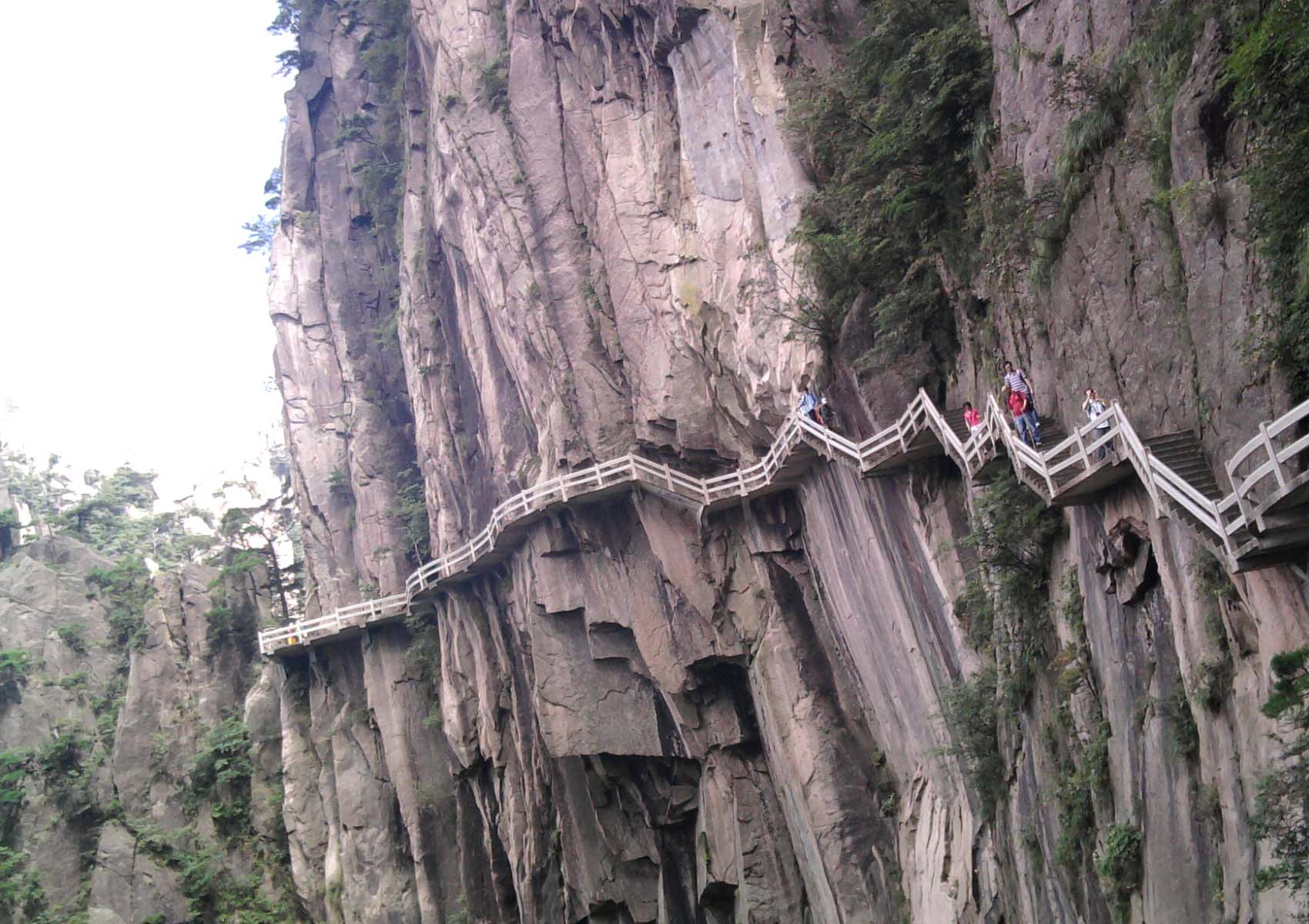
Huangshan is the strongest first choice for travellers who want demanding walking without remote camping or extreme altitude. The challenge comes from sustained stone steps, steep descents and weather exposure, while managed gates, marked paths, hotels and cableways provide several exit options. One night on the mountain allows a better pace; a hard day trip is possible only if transport, gate and cableway times align.
Choose the route from the official map and same-day operating notice. The West Sea Grand Canyon is a seasonal component, not the definition of the whole hike: it ended winter maintenance and reopened on 14 March 2026, but that announcement cannot guarantee access on a later storm day. A sensible loop keeps a cableway fallback and does not require reaching every named viewpoint.
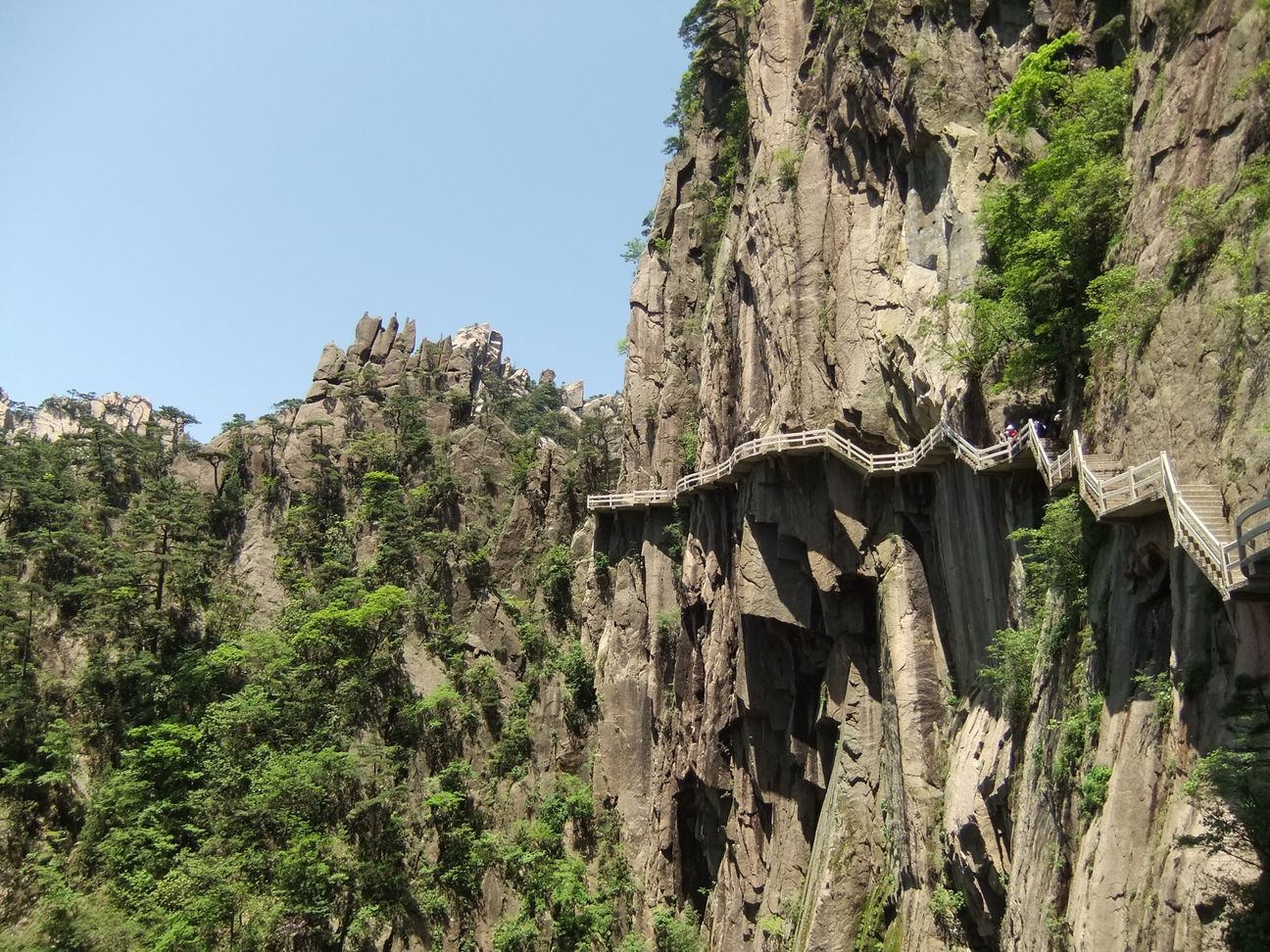
This is still not an easy stroll. Downhill steps can punish knees more than the climb, rain makes stone slick, and cloud can erase the famous view. Use grippy footwear, keep hands free and stop before the last transport becomes a sprint. Do not leave the built trail for a photograph. Huangshan is “best” here because its managed structure makes an honest first test—not because it guarantees sunrise, a sea of cloud or an empty ridge.
Yubeng works when the traveller wants separate day hikes from a village base rather than a continuous tented traverse. Official provincial route guidance describes a three- to four-day framework of roughly 50 kilometres across a broad elevation range, but the actual distance depends on the current vehicle access, official entrance and selected Ice Lake or Sacred Waterfall day. Do not repeat the old claim that the village is simply roadless or that every Xidang–Ninong line is open.
Allow an acclimatisation night before the main walks and keep one weather day. The Ice Lake and Sacred Waterfall outings are different in terrain and meaning; neither should be stacked merely to complete a list. Current official entrances, fire restrictions and trail conditions must be confirmed locally. Snow and ice have caused temporary closure, while summer rain can change slopes and river conditions.
Yubeng is not “moderate” for everyone. The high point, accumulated climbing and consecutive days matter, and a vehicle transfer does not erase altitude. Do not ascend with headache plus nausea, dizziness or unusual fatigue. Worsening symptoms require descent and help. A local guide is useful for pacing and route changes, but the guide must still follow an official closure. Choose Yubeng for the village-base rhythm; choose Huangshan if the group needs easier exits.
Mount Siguniang is not one classic trek. Shuangqiao Valley is the lowest-commitment scenic day, using internal transport and walking between managed stops. Changping Valley gives a longer trail day where the turnaround can be matched to daylight and fitness. Haizi Valley enters the outdoor-management system; only some routes reopened on 10 April 2026, and the authority requires formal outdoor procedures for clubs and individuals.
That ladder makes Siguniang useful for mixed groups. Spend the first day in Shuangqiao, assess the response to altitude, then choose a conservative Changping day or a properly registered Haizi activity. Scenic admission does not authorise a summit, camp or crossing. A May 2026 official prohibition separately bars entry into undeveloped or unopened protected areas, so the historic Changping–Bipenggou crossing should not be sold as a default open trek.
Ask an outdoor operator for the exact registered route, participant limit, guide credentials, equipment, horse or porter arrangements, rescue plan and cancellation rule. “Dafeng” or “Erfeng” in a package title is not enough. Weather and large events can pause outdoor formalities. For a traveller unsure about camping or altitude, stop at the managed valleys; there is no need to convert a good walking trip into a summit attempt.
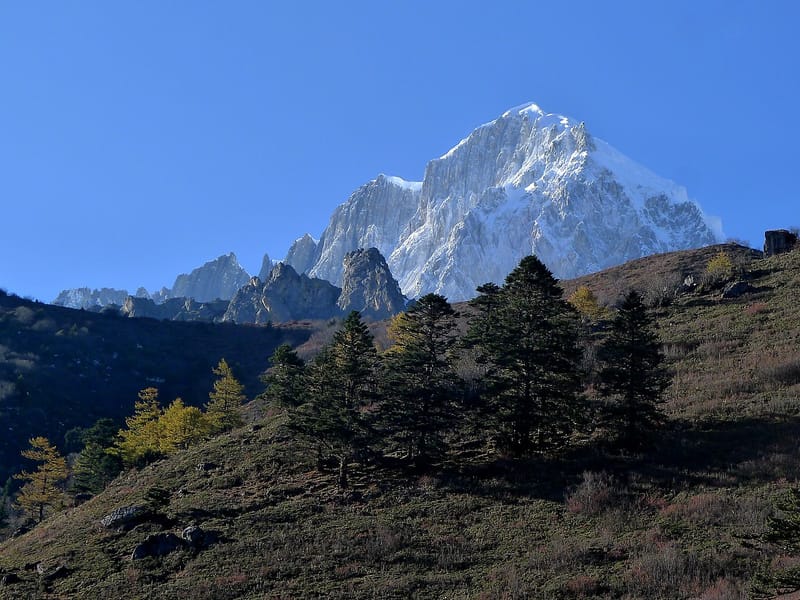
Yading is the right choice for a high-altitude landscape without committing to an unregulated multi-day circuit. Do the lower Guanyin Compassion route first. Its managed path and shorter format provide an honest test after arrival. Only then consider the high-lake challenge line, which was announced open from 1 May 2026 while geological-hazard remediation and route controls continued.
The high route is a long day at roughly 4,300–4,700 metres, not a simple extension because an electric cart covers part of the approach. Milk Lake and Five-Colour Lake are optional objectives. Turn around for symptoms, weather, crowd control or the published cutoff without treating that as a failed trip. Horses, oxygen or a clear morning do not make continued ascent safe.
Old references to a full mountain kora or “Lock/Rock route” should not be used as independent hiking instructions. Ask the Yading authority whether the exact activity is within the opened scenic route; if not, leave it out. Spend time at plateau elevation before the challenge day, avoid a tight flight connection afterward and keep the lower route as the complete alternative. Yading is best for travellers who accept a managed high day, not those seeking an unrestricted wilderness traverse.
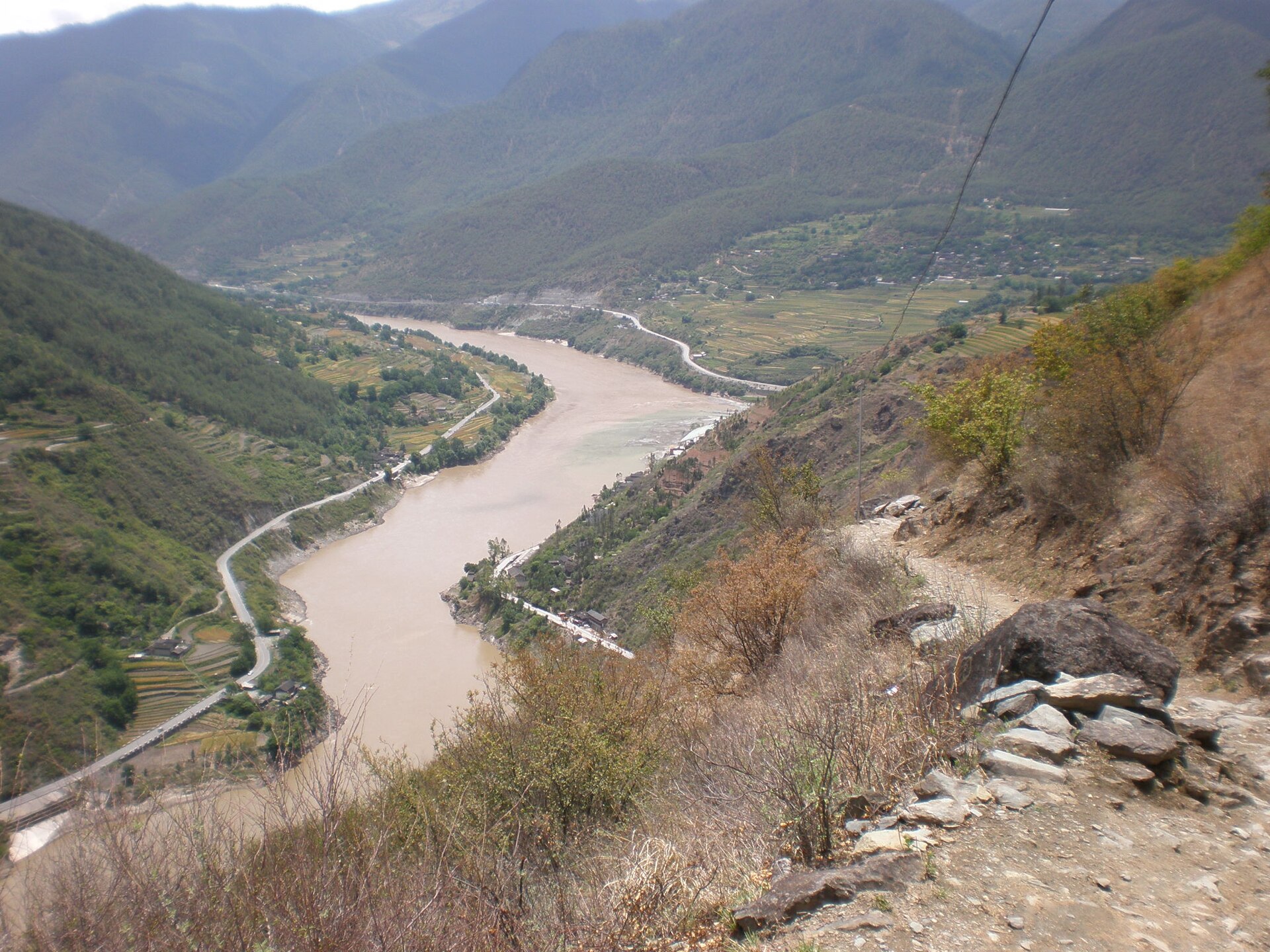
Remove Tiger Leaping Gorge's High Trail from an executable 2026 plan unless a later primary-source reopening explicitly replaces the February prohibition. The same notice covers Middle and Lower Gorge undeveloped areas. Historical guesthouses and path photographs show what existed; they do not create access. A March management meeting discussed rectification and long-term management, not general reopening.
Also remove wild Great Wall crossings presented as harmless day hikes, informal Haba summit packages, undeveloped Yading circuits and a Tibet trek sold without the organised foreign-visitor process. Everest Base Camp is generally reached by road and is not automatically a trek. A famous name, guide or online booking page is weaker than the current land manager's notice.
Before choosing, write five lines: official route name; current opening source and date; highest sleeping elevation; longest walking day; evacuation or descent option. Then compare the answer with the slowest member of the group. Huangshan wins for managed access, Yubeng for a village-based multi-day rhythm, Siguniang for progression and Yading for a controlled high-altitude day. Season changes the comfort, not the verification duty. Keep a lower route or cultural day in the same region so a closure does not force unsafe improvisation.
Book the Yading Lock (Rock) Route Trek with real-time availability.
See tour & book Plan with AIPrivate & flexible · English-speaking guide · real-time online booking.
Tell our local experts what you'd like to see and we'll design a private, tailor-made itinerary with English-speaking guides — free plan & quote, no obligation.